
Te Pūwaha restoration planting to protect South Mole area on South Spit

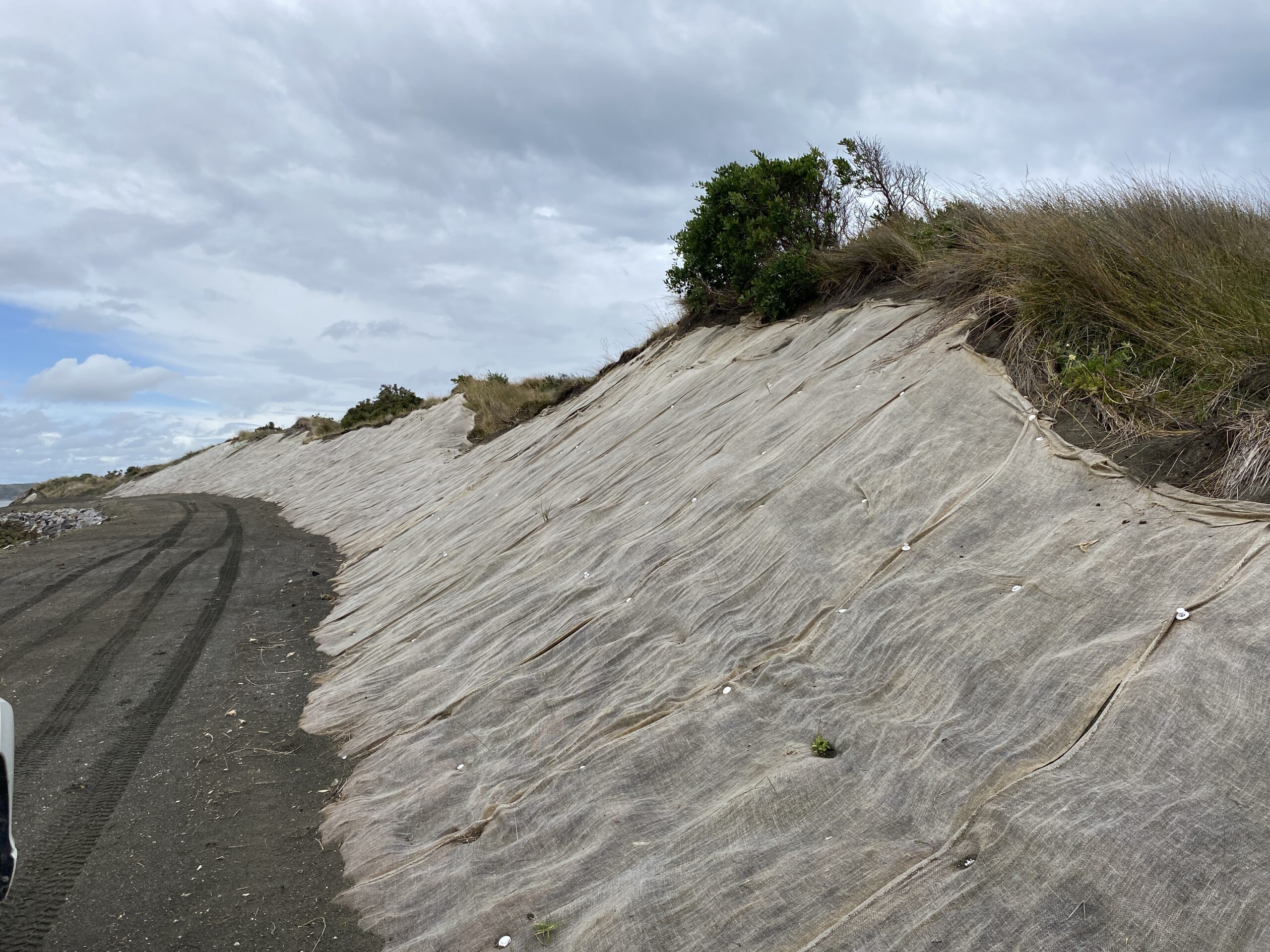
Te Pūwaha, the Whanganui Port revitalisation project, will enter a new phase of environmental restoration this winter, following the successful completion of key construction works at the base of the South Mole and Tanea Groyne late last year. Large scale indigenous planting is planned across the South Mole and surrounding dune system at the mouth of the Whanganui River.
The restoration programme will take place while construction continues along the length of the South Mole. Ecological restoration has always been an integral part of the project design, helping strengthen the resilience of the South Spit dunes against erosion and scouring and supporting the long term stability of the lower river channel.
As with all aspects of Te Pūwaha, project activities are guided by Tupua te Kawa, the innate values of the Whanganui River. In keeping with this approach, Te Mata Pūau and Horizons Regional Council have led the successful delivery of the first phase of works on the South Mole and are now preparing for the post-construction restoration programme. The work will focus on restoring indigenous dune habitats and strengthening the natural systems surrounding the river mouth, ensuring the area is healthier and more resilient than before construction began.
Planting will take place over the winter months with the support of local environmental groups. Due to the scale of the planting required across several zones of the South Mole and South Spit, community will also be invited to take part in planting activities.
Te Pūwaha project director Hayden Turoa says the restoration works reflect the kaupapa of the project.
“The approach taken at on the South Mole has been extremely inclusive and collaborative. Importantly, we have a clear plan to reinstate these areas with indigenous species that will enhance biodiversity and build long-term resilience.”
“This has always been a core part of the Te Pūwaha approach, and integrating it into the project from the start has helped streamline both the consenting and construction phases.”
Approximately 7,500 square metres of dune area will be restored following construction, with around 5,000 square metres to be planted this winter and the remainder to be planted once the South Mole upgrade is complete.
Indigenous sand-binding species including spinifex and pīngao will be planted across the site, as well as other native dune plants such as wīwī, pōhuehue and threatened tātaraheke. These species have been selected to stabilise dunes in the short term and improve resilience to future wind and flood events over the long term.
All of the plants have been grown from seeds and cuttings collected locally (known as eco-sourcing). The Learning Environment also undertook a plant salvage programme last year to uplift wīwī from the construction site for replanting as part of these restoration activities.
The mix of native plants and carefully positioned driftwood will also help create habitat for indigenous lizards and katipō, while allowing for a public walkway along the awa.
Horizons Regional Council group manager for catchment operations, Dr Jon Roygard, says the restoration work is a critical companion to the structural upgrades.
“These works are about protecting the alignment of the lower river channel and strengthening the resilience of the South Spit,” says Dr Roygard.
“By combining engineered solutions with indigenous restoration, we are supporting both flood protection outcomes and environmental enhancement.”
Dr Roygard says the planting design will also enable access for both community use and ongoing monitoring and maintenance.
“It will be important that the young plants remain undisturbed while they establish.”
The project team is also preparing for phase two works, which will extend the South Mole to its full design length and deliver further resilience improvements upstream of the Tanea Groyne. The successful tenderers for phase two will be announced in the coming weeks.
Te Pūwaha continues to be delivered as a true partnership between hapū, local and central government and community, with the health and wellbeing of the awa at the forefront of decision-making.
Further information about community planting days and how to get involved will be shared soon via Te Pūwaha channels.